Electric Fireplace Insert for an Existing Fireplace
Yes, an electric insert can sit in an existing fireplace when the firebox fits the unit and an outlet is within reach. Measure the width, height and depth of the opening first, and have an electrician add an outlet if none is close.
On this page (11 sections)
- Can an electric insert go into a brick fireplace?
- How deep is the firebox you need?
- Do you need an outlet near the fireplace?
- What about the hearth and the firebox floor?
- What if the brick or mortar is damaged?
- What about the chimney and the damper?
- Can you still burn wood or gas once the insert is in?
- When is a log set a better fit than an insert?
- Which insert suits an older firebox?
- Do you need a helper or a pro for this?
- Pick an electric insert for an existing fireplace if you want a closed front
Yes, you can put an electric insert in an existing fireplace, and the job comes down to fit and power. The unit sits in the firebox, needs an outlet nearby and makes a flame without burning anything.
Check the fit and the outlet first, since those decide most of the job for an existing firebox. The chimney question is one to settle with the manual and a chimney pro, not by guessing.
Can an electric insert go into a brick fireplace?
Yes, an electric insert can sit in a brick or stone firebox, as long as the opening is clear and the unit slides in without forcing it. Look at the walls and the top of the opening before you measure anything.
The firebox is the cavity behind the opening, and it sets the size limit for the unit. Older brick can bulge or chip, so the number that matters is the narrowest point you can find.
Measure your existing fireplace insert opening
Measure the width at the top, middle and bottom, and the height at the left, center and right. Use the smallest number, since a bulge in the brick can stop the unit from sliding in.
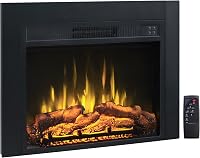
PuraFlame's Western is 35 1/16 inches wide, 26 31/32 inches high and 8 25/32 inches deep overall. PuraFlame asks buyers to contact it before ordering if they're unsure the unit suits their opening.
For the full Western breakdown, read the PuraFlame Western review.
How deep is the firebox you need?
The Western is 8.8 inches deep, the Klaus is 10 inches and the Legend Flame Damon is 11.6 inches. The deeper the unit, the deeper the firebox has to be, so depth can rule out a model before style even comes up.
Measure the depth at the back and the front, since the back wall of an old firebox may not be square. Use the shorter reading, and measure with any trim or frame in place.
If your opening is narrow, see the best small electric fireplace inserts.
Do you need an outlet near the fireplace?
Yes, the insert needs an outlet within reach of its cord, and a licensed electrician can add one if the nearest outlet is too far. Plan the outlet before you buy the unit, not after.
Both PuraFlame units run on 120 V and say they cannot be hard-wired, so they plug in. The Western's cord is 6 feet long and exits on the right side as you face the unit.
A cord that crosses the hearth can get caught. Plan its route before you set the unit in place, and keep it away from where people sit or walk.
What about the hearth and the firebox floor?
A flat bottom can sit on a level firebox floor, but a raised or uneven hearth can change how the unit sits. Check the floor with a level before you set the unit down.
Some inserts, including PuraFlame's Western and Klaus, have a flat bottom that rests on the firebox floor. If the hearth in front of the fireplace is raised, check whether the cord and the front frame still clear it.
What if the brick or mortar is damaged?
Loose mortar, cracked brick or a damaged firebox floor are repair jobs for a mason, and they should be fixed before the insert goes in. Don't use the insert to hide damage.
Don't chip or cut the masonry to make a unit fit. Pick a unit that fits the opening instead.
What about the chimney and the damper?
An electric insert burns nothing, so it doesn't need the chimney to carry smoke. The damper and the chimney's condition are questions for the manual and a chimney pro.
An electric insert doesn't make an old chimney safe or unsafe. If you're not sure about the flue or damper, have a chimney professional check it before you install anything.
The venting guide goes deeper on that question. The National Fire Protection Association publishes home fire safety guidance you can read for any fireplace in your home.
If you're weighing a real wood fire against this, see electric fireplace vs wood burning fireplace.
Can you still burn wood or gas once the insert is in?
No. Once an electric insert goes into the firebox, wood or gas burning in that opening stops, and the old logs come out first.
PuraFlame says its unit can replace an old fire once the old logs are removed and the opening fits. If the fireplace is gas, ask a licensed gas pro what to do with the line before you install anything.
When is a log set a better fit than an insert?
A log set suits a firebox you want to keep open, because it sits in the hearth with no trim to fit. It skips the fitting work that an insert needs.
Duraflame's log set plugs in, and Duraflame says it needs no vent or gas line. It weighs 13.6 pounds, so it's lighter to move than the inserts, and it's 8.66 inches deep, 20.51 inches wide and 12.6 inches high.
Duraflame says it heats up to 1,000 square feet, which is the maker's claim for supplemental heat, not a promise for your room.
If you're choosing between the two, read electric fireplace insert vs electric log set for a side-by-side look.
Which insert suits an older firebox?
A unit with a trim kit or a glass door suits an older firebox with uneven edges, while a plain plug-in insert suits a clean opening. Start by deciding whether you want the front closed or left open.
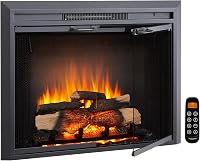
The Klaus is named for 33 inches, but with its trim kit it measures 44.1 inches wide, 31.5 inches high and 10 inches deep overall, and it has a glass door and mesh screen.
The Damon has a glass door and mesh screen as well, and it's 34.7 inches wide and 26.1 inches high.
For more models, see the best electric fireplace inserts.
Do you need a helper or a pro for this?
Many homeowners handle the measuring and the set-in with a helper, but the outlet and any hard-wire work go to a licensed electrician. The heavier units are easier with two people, such as the 46.7 pound Western.
A masonry firebox has sharp edges and loose grit, so wear gloves and eye protection when you measure and handle the trim. Bring in a pro before you install if the firebox looks damaged or the chimney raises questions you can't answer from the manual.
Pick an electric insert for an existing fireplace if you want a closed front
Pick an insert like the Western or the Damon if you want the front closed, and pick the Duraflame log set if you want no trim to fit.
Measure the opening and the depth first, since those two numbers rule out more models than the style does.
For the install steps, read how to install an electric fireplace insert. The wall mounted and recessed electric fireplace guide covers other ways to add a flame.
Frequently asked questions
Can an electric fireplace insert go in an existing fireplace?
Yes, if the firebox is big enough, the top and sides are clear, and an outlet is within reach of the cord. Measure the width, height and depth first, check the trim, and ask a licensed electrician to add an outlet if none is close.
Do you need to remove the old logs first?
Yes, remove old wood logs first so the opening is clear, and ask a licensed pro about any gas line. PuraFlame says its unit can replace an old fire once the old logs are out and the opening fits, so measure the empty firebox for width, height and depth.
Can you use a log set instead of an insert?
Yes, a plug-in log set like Duraflame's skips the trim work, and Duraflame says it needs no vent or gas line. It sits in the hearth rather than closing the opening, so it suits an open look, while an insert with a glass door closes the opening.
Does an electric insert need the chimney to be open?
The insert burns nothing, so it doesn't need the chimney to carry smoke. What to do with the damper and flue is a question for the manual and a chimney professional, so don't guess; have the flue checked if you're unsure about it.