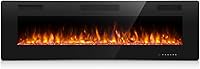
Are Electric Fireplaces Worth It? Costs and Trade-Offs
An electric fireplace is worth it if you want a flame look and some heat without a chimney. It is not worth it as your main heater or if you want a real wood fire.
On this page (7 sections)
- When is an electric fireplace worth it?
- When is an electric fireplace not worth it?
- How much work does the install add?
- Is an electric fireplace worth it if you rent?
- What are the main trade-offs?
- What should you check before you buy?
- Pick an electric fireplace if a flame and some heat are worth it to you
Electric fireplaces are worth it for many living rooms, if you want a flame look and some extra warmth with no chimney work.
A plug-in unit needs only an outlet, so you skip the flue and the gas line. The trade-offs are install effort, weight, heat limits and how real the flame looks.
For a wider look at the options, read our full guide to wall mounted and recessed electric fireplaces.
When is an electric fireplace worth it?
It is worth it when you want a flame look, some supplemental heat and no venting to install. You get all three from one plug-in unit.
Plug-in models need only an outlet, not a flue or a gas line. That is the main reason they are easier to add to a room than a gas or wood unit.
Is an electric fireplace worth it for the flame look alone?
Yes, if the flame look is what you want. Many units run the flame with the heat off, so you can enjoy the glow on mild days.
PuraFlame says its Western insert runs three flame levels with or without heat. That lets you use it as a decorative piece when the room is already warm.
For picks by type, see best wall mounted electric fireplaces.
When is an electric fireplace not worth it?
It is not worth it as your main heat, or if you want a real wood fire with smoke and ash. A zone heater warms the room it sits in, so it cannot replace your central heat.
PuraFlame says its Western insert is not a main heat source, and Touchstone and Antarctic Star both call their heat supplemental. That gap matters most in a cold house or a big open floor plan.
If the smell of wood, the sound of a real fire and the work of cleaning ash matter to you, a wood fire may suit you better. Real fires need their own safety steps, so read the NFPA home fire safety pages before you choose.
If you are weighing gas as well, see gas fireplace vs electric fireplace for a living room.
How much work does the install add?
A plug-in unit adds little beyond the unit itself, since it needs only an outlet. That keeps the install simple for most living rooms.
A recessed unit adds more work. It needs a framed opening, a cutout and a wall that suits the unit's depth, and the manual and a pro should guide that work.
A hard-wired unit needs a licensed electrician, as the manual directs. Plan for that visit before you buy.
Is an electric fireplace worth it if you rent?
It can be, since a plug-in model is the lighter commitment and needs only an outlet. Check with your landlord before you cut a wall or add a hard-wired unit.
Antarctic Star says its 36 inch unit can hang on the wall like a picture frame or stand on the legs it provides. Hanging means drywall screws, so ask your landlord about that too.
What are the main trade-offs?
The main trade-offs are install effort, weight, heat limits and how real the flame looks. Each one can change which unit suits your wall.
For what the heat numbers mean, see do electric fireplaces give off heat.
Budget, mid-range and premium units
A higher tier does not buy more heat, since the three units below all top out at 1,500 W. What differs is size, weight and build.
The budget Antarctic Star is 36 inches wide and weighs 33 pounds. The mid-range Tehanld is 60 inches wide, and the premium Touchstone Sideline is a 50 inch unit built for in-wall recess.
Install effort and weight
The Touchstone 50 inch unit weighs 59 pounds, so plan on a helper when you lift it. Touchstone says the Sideline can be hardwired or plugged in, and a hard-wired unit needs a licensed electrician, as the manual directs.
The Antarctic Star 36 inch unit weighs 33 pounds, and Antarctic Star says one person can hang it. That makes it a lighter lift than the Touchstone.
Heat limits and power settings
The Tehanld 60 inch unit has three power settings, 0 W, 750 W and 1,500 W, so you can run flame only or add heat. It also has a 12 hour auto-off timer.
A 1,500 W unit gives about 5,100 BTU per hour at the top setting, but it still heats one zone. For running costs, see are electric fireplaces energy efficient.
How much heat do you actually need?
Plan on warming one room, not the whole house. Antarctic Star, Touchstone and PuraFlame each say their unit gives supplemental heat for up to 400 square feet.
Those are maker claims for the best case. If the room still feels cool on the high setting, a zone heater is not the fix, so plan for your main heat instead.
Realism and noise
Most units use LED flames over logs or crystals, so you see light and props rather than burning wood. The Tehanld includes both a faux log set and crystal stones, and the Touchstone Sideline includes a log and crystals.
Tehanld says its unit runs at 40 decibels. Noise varies by model, so check the number before you put a unit in a bedroom.
For a more traditional look, PuraFlame's Western has an 11.8 inch resin log on a grate above an ember bed.
For the full set of checks, use our electric fireplace buying guide for the living room.
What should you check before you buy?
Check the width, the depth and the power type before you buy, since those decide whether the unit fits. Then check the flame and heat controls you will use every day.
Compare your opening with the unit's size. The Antarctic Star is 36 inches wide and 3.86 inches deep, and the Tehanld is 60 inches wide and 3.5 inches deep.
Confirm whether it plugs in or is hard-wired, and whether the heat and flame run from separate switches. Antarctic Star says its heating and flame switch independently, and Tehanld has a flame-only mode.
Pick an electric fireplace if a flame and some heat are worth it to you
Pick a plug-in unit if you want a flame look, some supplemental heat and the lightest install. Pick a recessed unit if you want a built-in look and can frame the wall, with the manual and a pro guiding the work.
Skip an electric fireplace as a main heater, or if a real wood fire is the point. Start with the room you use most, and match the width to your wall with what size electric fireplace do you need.
For picks that drop into an existing opening, see best electric fireplace inserts.
Frequently asked questions
Are electric fireplaces worth it as a main heater?
Usually not, since they are zone heaters that warm the room they sit in and not the whole house. Use one for extra warmth where you sit, and keep your main heating on for the rest of the home all winter.
Are electric fireplaces worth it for the look alone?
They can be, if you like the flame and want no chimney work. Many units run the flame with the heat off, so you can use the look on mild days, and the number of flame colors and brightness levels differs from model to model.
Do electric fireplaces need an electrician?
A plug-in unit needs only a working outlet, while a hard-wired unit needs a licensed electrician, as the maker's manual directs. Touchstone says its Sideline can be hardwired or plugged in, so check which install you are buying before you order.