Do Electric Fireplace Inserts Need to Be Vented?
No, an electric fireplace insert doesn't need to be vented, because it burns no fuel. It still needs its air grilles kept clear and the maker's clearances followed.
On this page (10 sections)
- Do electric fireplace inserts need to be vented at all?
- Why gas and wood need a flue, and electric doesn't
- What an electric insert still needs for air and clearance
- Does an old chimney change the answer?
- Where an electric insert fits when there's no chimney to use
- Do log sets and inserts both skip the vent?
- Which of these inserts plug in?
- When you're deciding between electric and wood
- When to call a pro about the venting question
- Pick a plug-in insert if you want a flame with no flue work
No, an electric fireplace insert doesn't need to be vented, because it burns no fuel and makes no smoke or fumes. It still needs its air grilles kept clear and the maker's clearances followed.
That holds for electric fireplace inserts going into an old fireplace with a chimney above it. The chimney itself is the one part that is a question for the manual and a chimney pro.
For the wider picture, read our full guide to wall mounted and recessed electric fireplaces.
Do electric fireplace inserts need to be vented at all?
No, an electric fireplace insert doesn't need a vent or flue, because it burns no wood, gas or other fuel. Its heat comes from an electric element, so there are no smoke or fumes to carry out of the room.
Duraflame says its electric log set has no vents to install and needs no gas lines. The same holds for the inserts in this guide, since none of them burns fuel.
Why gas and wood need a flue, and electric doesn't
Gas and wood burn fuel, so they make combustion gases that a flue or vent has to carry out, while an electric insert makes heat with no combustion. That single difference explains almost the whole venting answer.
A gas insert needs a flue or a direct vent, and a wood fire needs a chimney that draws smoke up and out of the house. An electric insert skips that whole system, which is why its install is mostly about the opening and the outlet.
The National Fire Protection Association publishes home fire safety guidance you can read if you keep a gas or wood unit in the same home.
For how much heat an electric unit gives, read do electric fireplaces give off heat.
What an electric insert still needs for air and clearance
An electric insert still needs its front air outlet and grilles kept clear, and the maker's manual sets the clearances for each unit. Venting and airflow are different questions, and the answer to one doesn't settle the other.
Blocked openings can set off the overheat protection, which cuts the heat until the unit cools down. Keep furniture, drapes and soft items away from the front, and don't stack anything on top of the unit.
Each unit has its own clearance from nearby items, so read that page of the manual before you place the unit, not after.
PuraFlame says the Western shuts off automatically if it overheats, and Giantex says its unit has a safety cut-off device for overheat protection. Those are maker claims, so they don't replace the clearance notes in the manual.
Does an old chimney change the answer?
The insert still doesn't need the chimney, but an old chimney, damper or flue raises questions that the manual and a chimney pro should answer. An electric insert doesn't make an old chimney safe or unsafe.
If the liner, damper or flue is unclear to you, have a chimney pro look at it before you install anything.
Do electric fireplace inserts need a vent in an old chimney?
No, the insert doesn't use the chimney to carry fuel gases out, so the chimney's job is not venting the unit. The open questions are the flue and damper, not the insert itself.
Your manual and a chimney pro should say what to do with the damper and flue once an electric unit sits in the firebox. Don't assume an old chimney is safe just because the insert doesn't burn fuel.
Where an electric insert fits when there's no chimney to use
An electric insert can sit in a cabinet, a wall opening or a firebox with no chimney, as long as the outlet and the front airflow work. A chimney isn't a requirement for the unit itself.
A TV stand or cabinet is a common case. Read the stand maker's notes alongside the insert's manual before you place the unit.
Giantex says its 28.5 inch unit gives off no gas, ashes or pollution, and it can go into a cabinet or a wall opening. Giantex also asks you to check the dimensions of your TV stand or cabinet first.
Do log sets and inserts both skip the vent?
Yes, electric log sets and inserts both skip the vent, so the choice between them comes down to look and fit, not venting. The venting answer is the same for both.
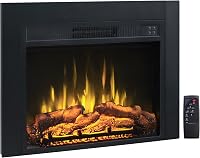
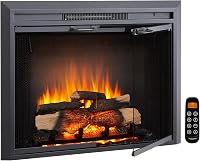
Duraflame says its log set needs no vents, gas lines or construction. The difference is the front: the LegendFlame Damon closes the opening with a glass door and mesh screen, while the log set sits in the hearth.
For the full side-by-side, read electric fireplace insert vs electric log set.
Which of these inserts plug in?
The PuraFlame Western, the PuraFlame Klaus and the LegendFlame Damon all run on 120 V, and each maker says they cannot be hard-wired. Check any other unit's manual before you assume it plugs in.
That is why the install is the opening, the outlet and the clearances. A hard-wired unit or a new outlet adds a licensed electrician, and the manual says when that applies.
When you're deciding between electric and wood
A wood fireplace needs a chimney that's inspected and cleaned, which is work an electric insert skips. That's the main venting difference between the two.
If real flame is the goal, a wood fire is the right choice, and that's a matter of what you want the room to feel like. Read electric fireplace vs wood burning fireplace before you decide.
When to call a pro about the venting question
Call a chimney pro when a flue, damper or liner is part of the question, and call a licensed electrician when a hard-wired unit or a new outlet is part of the job. A chimney pro handles the flue, damper and liner, since those go beyond the insert itself.
Use the maker's manual first, since it sets the air grille, clearance and flue notes for your unit. It's the most specific source you have for the answer.
Pick a plug-in insert if you want a flame with no flue work
An electric fireplace insert needs no vent, so pick a plug-in insert if you want a flame and some heat with no flue work and an outlet is within reach.
Pick a log set if you want the lightest unit with no trim, and read the insert vs log set comparison for the trade-off.
If the chimney, damper or flue is part of the question, call a pro before you install, and follow the manual's clearances in every case. For the steps once you've chosen, read how to install an electric fireplace insert.
If the opening is an old firebox, read putting an electric insert in an existing fireplace. For more models, see the best electric fireplace inserts.
Frequently asked questions
Can I use an electric insert in a fireplace with a chimney?
Yes, if the opening fits and an outlet is within reach, since an electric insert burns no fuel and needs no flue. Follow the manual on the damper and flue, and have a chimney pro check them if you're unsure about either one.
Do electric fireplace inserts give off smoke or fumes?
No, since the heat comes from an electric element rather than a flame, so there's no combustion to carry up a chimney. Keep the air grilles clear, follow the manual's clearances, and check with a pro about any chimney questions.
What does venting mean for an electric log set?
Venting means a flue or pipe that carries combustion gases out of the house. Duraflame says its electric log set has no vents to install, so it needs no flue or gas line either, only an existing fireplace and an outlet.
Do gas inserts need venting?
Yes, gas inserts burn fuel and need a flue or a direct vent to carry combustion gases out of the house. Electric inserts have no combustion, so they need none of that, but the air grilles and the manual's clearances still matter.