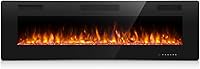
Are Electric Fireplaces Energy Efficient?
Yes, an electric fireplace is energy efficient at making heat, since nearly all its power becomes warmth. That does not make it cheap to run, because the cost depends on the watts and the hours.
On this page (13 sections)
- Are electric fireplaces energy efficient at making heat?
- Why does zone heating matter for efficiency?
- Is an electric fireplace more efficient than a space heater?
- What do 750 W and 1,500 W mean for your power use?
- Does the room size change how much power you use?
- How do thermostats and timers change the run time?
- What habits keep the run time short?
- Does flame-only mode use much power?
- Do infrared stoves and log sets use power the same way?
- What does the low setting feel like in a room?
- Are the power numbers easy to compare?
- How do you estimate your own energy use?
- Pick an electric fireplace if you want efficient heat for one room
Are electric fireplaces energy efficient? In one way, yes, since nearly all the electricity becomes heat in the room.
That does not make them cheap to run. What a heater costs depends on the watts it draws and how many hours it runs.
This page explains what the watt settings mean, where the efficiency stops and how to estimate your own use. For the wider picture, read our full guide to wall mounted and recessed electric fireplaces.
Are electric fireplaces energy efficient at making heat?
Yes. A heating element turns almost all the power it draws into heat, so little of that energy goes up a chimney the way it does with a wood fire.
For how real fires compare on heat and upkeep, see electric fireplace vs wood burning fireplace and gas fireplace vs electric fireplace for a living room.
How energy efficient an electric fireplace really is
Efficient at making heat is not the same as efficient at heating a house. A unit warms the room it sits in, and the rest of the home stays on your main heat.
Whether that matters depends on how much of the home you heat and how long you run the unit.
Why does zone heating matter for efficiency?
A zone heater warms the space near it, so you heat only the room you use. That suits someone who sits in one room most evenings.
It works against you when the whole house is cold. A zone heater leaves the rest of the home cold, so you will still need your main heat.
Is an electric fireplace more efficient than a space heater?
Both turn nearly all the power they draw into heat, so the watt rule is about the same for each. The efficiency at making heat does not separate them.
The fireplace adds a flame look, and that look adds very little heat. A plain space heater may suit you better if you only want warmth.
What do 750 W and 1,500 W mean for your power use?
A 750 W setting draws 750 watts, and a 1,500 W setting draws twice that. Each hour on the high setting uses 1.5 kilowatt-hours (kWh), and each hour on the low setting uses 0.75 kWh.
Multiply the kWh by your electric rate, which is on your power bill, to estimate the cost. The rate changes by area and by plan, so use your own number.
The low setting draws half the power of the high one, so it is the easy first choice when the room only needs a little warmth. Giantex lists 2,559 BTU for its 750 W mode and 5,118 BTU for its 1,500 W mode.
Does the room size change how much power you use?
A unit draws its full watts only while the heating element is on. A cold room keeps the element on longer, so the total hours of use go up.
The thermostat cycles the heat on and off to hold your set point. A warm room lets it stay off for longer, so the same unit runs fewer hours.
A bigger room or a colder day can mean more hours on heat, even on the same setting.
How do thermostats and timers change the run time?
A thermostat stops the heat once the room reaches your set point, and a timer turns the unit off on its own. Both limit how long the heat runs.
Giantex's thermostat runs from 62°F to 82°F, and Antarctic Star's 36 inch unit has a 1 to 8 hour timer.
Neither feature changes how much power the heat uses while it runs. They only decide when the heat stops.
Set the timer for the hours you plan to sit in the room, so the heat shuts off on its own when you leave.
What habits keep the run time short?
Run the heat only in the rooms you use, and set the thermostat to the level you actually need. Turning the heat down a few degrees is a simple change to try.
Close the door to the room so the warm air stays where you sit. Use flame-only mode when you want the look and the room is already warm.
Antarctic Star's 36 inch unit has independent switches for the heat and the flame, so you can turn the heat off and leave the flame on.
Does flame-only mode use much power?
Flame-only mode draws far less power than heat mode, because the heating element is off. The flame effect runs on its own lighting.
Electactic says its LED flame technology reduces power use. If the exact watts in flame-only mode matter to you, ask the brand for that number before you buy.
Do infrared stoves and log sets use power the same way?
Yes, the same watt rule applies, because their infrared heat also comes from electricity. The setting you pick decides how many watts the unit draws, so you can compare a stove or a log set with an insert.
Duraflame says its freestanding stove heats up to 1,000 square feet. It also has an adjustable thermostat, a flame dial and a timed shut-off, which help limit the run time.
What does the low setting feel like in a room?
The low setting gives about half the heat, so it suits a small space or a chair close to the unit. On 750 W, a unit will not warm a large room much.
For what each setting does to a room's temperature, read do electric fireplaces give off heat?
Are the power numbers easy to compare?
Not always, since some units give watts for each mode and others give only the heat rating. Antarctic Star lists 5,100 BTU for its 36 inch unit, and Giantex lists 5,118 BTU for its high setting.
Compare the watts for the setting you use most, and ask the brand for any number that is missing.
The best wall mounted electric fireplaces roundup lines up the heat settings side by side.
How do you estimate your own energy use?
Multiply the watts by the hours, then divide by 1,000 to get kilowatt-hours. Multiply that number by your electric rate from your power bill.
For example, a 1,500 W setting run for 3 hours uses 4.5 kWh. The same 3 hours on the low setting uses 2.25 kWh, so the setting you pick changes the total a lot.
One hour on 1,500 W uses the same 1.5 kWh as two hours on 750 W.
For general tips on lowering home energy use, the Energy Saver site from the U.S. Department of Energy at energy.gov is a good starting point.
Pick an electric fireplace if you want efficient heat for one room
Pick an electric fireplace for one room, and run the low setting when that is enough. Pick a whole-home system if you need to heat the entire house, since a zone heater cannot do that job alone.
Then read are electric fireplaces worth it to weigh the trade-offs.
Frequently asked questions
Are electric fireplaces more efficient than a gas fireplace?
Electric fireplaces turn nearly all their power into heat but heat one zone, while gas and wood fires need fuel and usually a vent. Compare the room you want to heat and how you would run each one before you decide, since that depends on your home.
How many kWh does an electric fireplace use each hour?
A 750 W setting uses 0.75 kWh each hour, and a 1,500 W setting uses 1.5 kWh each hour. Flame-only mode uses much less, since the heating element is off, so multiply by your electric rate from your power bill to estimate the cost.
Does a thermostat lower the power an electric fireplace uses?
It limits how long the heat runs, because the heat turns off when the room reaches your set point. It does not lower the power the heat uses while it runs, so set it to the level that keeps the room comfortable.